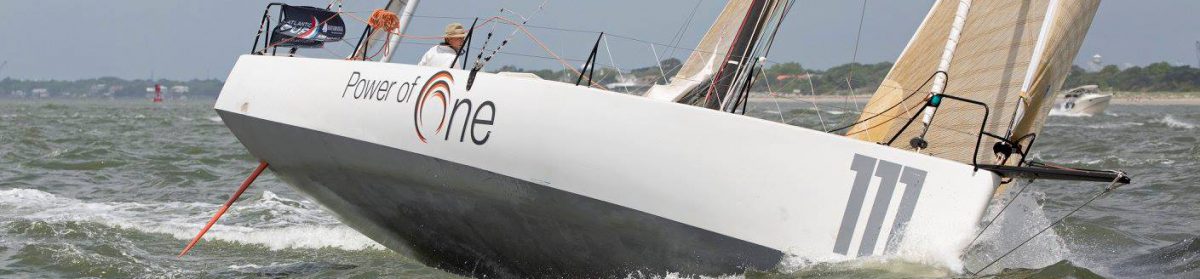
Awards Night in Paris – article and photos

Awards night in Paris – Route du Rhum-Destination Guadeloupe 2018

Article – https://www.routedurhum.com/en/news/1470

Photo Gallery – https://www.routedurhum.com/en/media/images/1134

Route du Rhum 2018 Prize Giving
Awards night in Paris

Official Finish Photos

Donald Alexander on Power of One – Official finish photos – Route du Rhum-Destination Guadeloupe 2018

https://www.routedurhum.com/en/media/images/1098

Power of One sailing across finish line Route du Rhum
Donald Alexander crosses finish line
Power of One sailing across finish line Route du Rhum
Donald Alexander crosses finish line

A Nice Article on The Route du Rhum Website

First Swede and First South African ever to complete Route du Rhum
Mikael Ryking and Donald at the finish in Pointe-à-Pitre

The 2018 Route du Rhum-Destination Guadeloupe saw the first sailors from Sweden and South Africa to finish the race in its 40-year history, in Mikael Ryking and Donald Alexander respectively.

Here they are comparing notes on their epic voyages in Pointe-à-Pitre not long after Alexander finished. Ryking (left) on board Talanta made it to Guadeloupe in 21st place in the Class40 fleet after 22 days, 16 hours and 53 minutes at sea. Alexander (right) on Power of One, finished two places further back after 26 days and 34 minutes.


UPDATE: Dec. 1st – From the Man Himself “Reflections on the Last Few Days”

Ah, the pleasures of dry land and civilization. Can’t tell you how nice it is to have a good meal, ice cold beers and a comfortable, stable bed. And no more stress.  And to have the comfortable, calm and loving proximity of my wonderful angelic wife. What have I done to deserve her?
I was too tired yesterday to say much, but feel somewhat replenished after 8-9 hours of a deep and constant sleep. Not enough, but adequate to give me a sense of normality again.  The last few days,  I was pretty quiet in my communications, so thought I’d fill in some of the gaps.
I’m not sure how many days I’m going back,  but probably about 3 – 4,  which coincided with a fundamental shift in conditions, boat handling and strategy.  This shift mostly  revolved around being limited to having only compass autopilot (“CAP”),  an obstacle which added significant challenge of my voyage.  For those of you familiar with sailing, and keelboats in particular, you’ll understand, but for those of you who aren’t, I’ll give a bit of detail. For solo sailing the most important piece of equipment on board , after the sails obviously, is the wind autopilot (“WAP”). It’s basically the equipment that allows you to sail solo. In the old days, they used wind vanes which were pretty effective, and many cruisers today still use them. My good friend, Ian, in the closing stages of building his boat, will be using such a device.  And so,  I put a lot of emphasis in my pre-race preparations to have a solid, reliable WAP.  I upgraded the entire system to the B&G H5000 system and had an extra back up masthead unit (“MHU”) installed, giving me one vertical one (the main one, the “VMHU”) and a horizontal one (the back up, or “HMHU”). All the calibrations were done for the VMHU, and so gave it a high level of sensitivity. In fact, it can helm much better than I can, especially at night. It also has a new yaw sensor in it, which adds another level of sensitivity and accuracy in adjusting to the environment. A remarkable piece of electronics engineering! And the HMHU was there as a backup in the unlikely event that the VMHU malfunctions for whatever reason. Right!!
So, going back a bit to the Bay of Biscay, which is the stretch of ocean between France and Spain notorious for violent storms.  Crossing it came as a surprise in more ways than one, when the VMHU got knocked out during one of those (many) low pressure systems.
(I called that entire area, all the way to the Azores, the “LPP”, the Low Pressure Purgatory).  You don’t get any nice forewarning as the boat just immediately goes into aimless mode in gusts over 40 knots, which can be very disconcerting.  Thank goodness the boat went into tack mode and not gybe mode!  What had happened, in this instance, is that the wind and whipping motion combined to simply “throw” the wind vane off.
This coincided with the damage to the main ring frame supporting the mast and keel structure. Fortunately, I had the HMHU to get me to La Coruna, Spain and I was able to round up a spare vane for the VHMU while there.   I was fully restored when I left La Coruna to rejoin the race…, until 3 nights later and back in LPP (Low Pressure Purgatory).  It was blowing 40-50 knots and, BANG, another unwanted tack and I knew the VHMHU was gone. I was now in a heave to position so could switch everything off without too much chaos, and then connect the HMHU. Back in business, and a calmer state of mind….or, so I thought, until two hours later, after another particularly bad slam (when the boat comes off the back of a big wave and literally “freefalls” into the trough), and BANG, another spontaneous and unwanted tack.  It didn’t take any great powers of deduction to figure out what had happened, the HMHU was out. I was hoping it was just simply a loose connection somewhere that the slamming/pounding had exposed, but my worst fears were confirmed at daybreak.  I peered up the mast and the vertical rod of the VMHU was still there, but nothing at the end of it.  The entire MHU sensor assembly, wind strength and direction, was gone, simply ripped off.  To give some perspective of the forces at play, my much loved boat survived Hurricane Matthew in Savannah in 2015, with the VMHU fully intact and operational afterwards. The recorded wind speeds in the area at that time were 85 knots! And the HMHU? No sign of it at all. Gone, rod and all!  That was a disappointing moment and time to reflect on my options. I still had way more than 2000 nm to go and no excesses in food and water.  And was it even practically possible to race that distance on compass AP?  I think the Azores was the nearest land, or at least reasonably equidistant to Europe, so I decided I might as well press on and see how it goes.
So, finally, fast forward to the final few days (thanks for your patience (smile)).
But first some background on compass AP (“CAP”) for the non sailors.  It does a great job steering you in a straight line but has no awareness of the surrounding environment like wind strength and direction and the sea state. And in reality, the environment is shifting all the time. So to stay competitive, you have to adjust the sails, the amount and the trim, to the changing conditions all the time, 24/7! And to appreciate the conditions fully, you need to be up on deck a lot of the time. Fortunately, my windex at the top of the mast gave me visuals of wind direction (when it wasn’t stuck ). I’d spend many hours lying on my back in the cabin on my bean bag peering up at the windex at the top of the mast through the coach roof window, making adjustments to our course (and,so, angle to the wind) on the AP console. This is what got us through that next and final low pressure when it blew well over 50 knots and I had to keep the speed down to save breaking my poor boat again. How did I know it was that strong without wind instruments? Crossing the Bay of Biscay, the highest reading I saw was 46 knots and this was materially more! Doing that for 16 hours, mainly at night, nearly broke me and, when it it died down the next morning, I came close to calling it quits. The Azores was only a few hundred miles away and oh so appealing. But after a bit of sleep and food, my optimism started filtering back.  So effectively, I was the new Wind AP (“WAP”)!.  Over the next few days, I adapted to the new environment, but largely through remaining awake a lot.  And, remarkably, I was gaining positions, largely because I was sticking so religiously to the Rhum line (the shortest route).
So back to the last few days. I discovered, with time and trial and error, that the CAP, the sails and I, could get quite a lot out of the boat up to 135 degrees true wind angle (“TWA”), which is the direction of the wind relative to the boat. And eventually, I settled down into 23rd, up from 29th when I rejoined the race. There was group 300 nm ahead of me and a group 150 nm behind me, so I set my sights on the group in front hoping I could catch them in the 1500 or so nm remaining. I was gaining every day, but, as time went by, and the conditions changed, they started drawing away and, eventually there was not enough distance remaining to catch them. And so my attention went back to the group behind me (the “chasers” I called them) which, at this stage, was now around 210 nm behind me.  A nice cushion, or so i thought, until i fell into a horrible windless hole for an entire night and they took 50-60 nm out of me. That was heartbreaking and I was concerned that, despite following the routings Adrena (my navigation software) gave me based on the weather models, I had fallen into a big systemic high pressure system from which there was no immediate escape and I was doomed to watching them sail past me without a contest. But, slowly, as the next day progressed,  the wind started to filter though again and, in no time, I was surfing up to just over 20 knots and in the next 24 hours recovered 35 of those lost miles. I was on top of the world and comfortable with my 23rd until the finish, a few days away.  I did notice from the Gribs (the wind direction and strength data) that the last few days were going to be deep downwind sailing, most of it at 150 TWA in lighter winds. No problem…., until I got there and the differences in the relationship between my CAP and the sails became irreconcilable :). It became a living hell as the CAP simply could not keep a straight course in those conditions.  She kept over correcting, with the result that the A2 spinnaker, an enormous 185 m2 sail, kept collapsing. The Class 40 is a highly sensitive boat and likes to build momentum so as you build speed, the apparent wind builds and she goes appreciably faster.  And this is when I think the lead chaser, #24 Tarenga, could smell blood and started reeling me in at speed. Often his velocity made good (“VMG”) was 4 knots faster and the gap between us started narrowing rapidly. Very stressful and I felt almost helpless to do anything about it.
I tried hand steering a lot of one day but, with the hot tropical sun, I almost felt like a bit of heatstroke was coming on and suffered into the next day.  And to add more tension to my tired nerves, two days out, in the early hours of the morning, I got caught in a squall, not the meanest around, but enough to shred my A2 which was an absolute necessity in those conditions. At daybreak, I set the A3 which is also quite big at 155 m2, but more of reaching sail for up to 135 degrees TWA. But at least it was something. It was now becoming quite tactical, #24 was getting more wind further to the South, but my routings were suggesting to head more West. It was a fork in the road, follow the routing or cover my attacker (in sailing tactics that’s generally the smartest tactic). Before shredding the A2, I was opting for the latter and he still kept gaining on me so, when I got the A3 up, I decided to rather follow my own course and let the cards fall where they would. As it turned out,  I got good wind on my second last night and when I hit the lay line to gybe onto my final approach to Guadeloupe, I had pulled a bit out on him and I was sailing at a tighter TWA than the Gribs forecast, so my speed and control were up. I was romping home but, for whatever reason, my Iridium Go satellite communications device refused to take a charge (possibly corrosion in the connection),  so all comms were lost. No more weather reports or communication from the outside world. But I was pretty sure I still had a margin of around 40nm between us. Now it was a case of keeping speed up and not breaking anything. It was champagne sailing in a10-15 knots and I was nearly there. I should make it in 23rd.
The little mental comfort I was giving myself was cut short when I saw a massive squall moving in behind me.  This one was definitely not benign, and so it was a couple of hours of assessing if it was going to rumble by me to the East or just roll over the top of me. What strategy to follow next? I was pretty fatigued, so my decision making was slow. I first put in a reef, with an option to put in another, just in case it caught me, but kept the option of pulling the sock down over the spinnaker to depower it completely.  By the time I realized that I had to do this, the wind had picked up to 20- 25 knots and I couldn’t get the last third of the spinnaker under control.  It looked like there was bunching of the sail which was preventing the sock from coming down. Damn, and then the block (sheave) on the foredeck though which I was pulling the sock down blew up and the sock shot back up the sail.  This put the sail at full power and the squall was moving in with spots of rain coming through. Oh boy, here we go, I have no choice but to ride this monster with a full A3 and only one reef. I bore away and took the helm and settled in for the wild ride. We were doing a steady 13 – 16 knots, but instead of a course to Guadaloupe of 240 degrees, we were heading to Antigua at 285 degrees.  That’s the influence that these squalls have on the wind strength and direction. It was blowing a steady 25 knots but, to my absolute relief, it looked like we were just getting a glancing blow from it as it slid by to the East.  It did not get much over 25 knots, but it was a monster or a series of monsters that kept me going off course for an hour and a half. Generally, these squalls are over and done with in 15 minutes, but in that time, it took me 20 nm off course.  Once it had passed, to get back on course to Guadeloupe meant sailing at an even tighter angle, which was even better for the A3, control of the boat and speed.
I thought I was home and dry until I saw a sail on the horizon. “Oh no, not #24 again” was my immediate thought, but I had no way of finding out with my satellite comms down. I was girding my loins for a final fight to the finish but not relishing the thought, especially as I had pumped the last bit of water out of my water sac…another story in itself. 🙂 And then I thought of the hand held Iridium, which was not the most reliable, but I needed it in any event to communicate with the Race Director regarding my ETA at the last waypoint on the Western side of Guadeloupe. I tried texting a friend my mine in the USA, Rich, who was following my progress closely. The first few texts kept coming up with a “Failed to transmit” message, so I lost confidence in the device and then suddenly I heard a beep from it to tell me I had a message. It was from Rich who said #24 was further behind now at 47 nm and that I was consistently gaining on him and the boat behind me was an Imoca 60. You have no idea what a relief that was!
So I got sight of land again as the sun was setting for the first time since passing the Azores around the 17th. It was a beautiful evening and I was nearly back and a sense of relief and joy started setting in. And possibly a bit of complacency. I decided to take the A3 down before dark as I didn’t want another spinnaker related disaster in the dark on my hands again. It came down relatively uneventfully, but my speed plummeted from 10 to 6 knots.  I immediately started doing mental calculations of how long it would take #24 to catch up if he was doing a consistent 4+ knots faster, so I put up my trusty gennaker, which got us back up to 8-9 knots and became invaluable going round the lee of the island.
 
As I say, my judgment was deteriorating with fatigue and instead of going round the one waypoint on the Northern end of Guadeloupe, which, according to the French Race Instructions, had to be “passed to port,” I was enjoying the evening and watching the lights ashore when it suddenly occurred to me that I had not checked my position and was actually happily about to not only sail past the waypoint on the wrong side, but was also in shallow water which, at low tide, was shallower than my keel draft of 10ft. I had just enough time to gybe back onto starboard, round the waypoint and get back into deep water without having to furl the gennaker and beat back. How scarily close was that, and an indication of the effects of fatigue and sleep deprivation on judgement and overall awareness.  It could have not only cost me the race but landed me on the rocks!!  Very sobering. 
And then the final challenge…, sailing around the lee of the island.  I wasn’t quite sure what it would be like, but had heard stories about it and that it could be brutal.  The general advice was, despite getting closer to the source of the wind shadow, to go inshore, which I ultimately did.  I was really happy that I had consistent breeze for at least a third of this distance. The wind gods were on my side. I also had cell phone signal, which was great so I could communicate with my dear wife. I could also communicate with Race Direction and told them I was probably going to be early to the final waypoint, about a mile off the coast, reaching it in 1 – 1 1/2 hours. How wrong I was!  5 hours later, I was still flopping around in no wind. I can’t tell you how soul destroying that was!  And you have to stay awake the entire time. The conditions were completely unpredictable, creating the opportunity for hard fought positions gained sailing across the entire Atlantic to be lost in the space of a few hours. I’m not sure why the organizers force the fleet that way rather than having wind all the way via the Eastern side of the island, but have a sense it is part of the French solo sailing machismo that, despite everything you’ve been through, they’re going to make the last hurdle really tough for you…, no wind!  You cannot relax. The wind is from the East, then West, then South, sometimes zero knots, sometimes 3 – 5 knots. Unless you take advantage of every shift, you simply don’t move.  I was falling asleep on my feet, my buckling knees waking me up. I was also hallucinating a lot, convinced I had other people on board with whom I was discussing strategy. Scary but true!
Also, with the wind so light, the solent (jib) did not have enough breeze to push it around onto the next tack and I would have to walk it around. A tedious job at the best of times. But slowly but surely, I muddled along and, finally, around daybreak, I neared the final waypoint and passed it doing about 7 knots.  I was on my way again!  Then it was time to prepare for the final beat into the Trades to the finish line. Coming around the corner, the wind accelerated and next thing, it was blowing up to 25 knots.  At this stage, I was pretty confident that #24 could not catch me, and I simply wanted to get in without any drama, so put I put in two reefs, filled the weather tanks with ballast and set off round the corner.  Surprisingly, I was still overpowered with much of the mainsail backwinding, but I was chilled heading onto the final stretch. I wasn’t looking at the fastest route with lots of tacks, but just a simple leg out to the lay line, pretty close to the nearby islands, so I got a nice view of them, and then tack onto the final tack to the line.
I texted Race Direction my ETA and they responded that they would meet me on the finish line, so I asked if Debra could go with them.  They were totally agreeable, which was awesome, but sadly, the time I told her to be there (based on my phone) was four hours off and she just missed coming out with them. What a shame, as I was dying to see her and it was a special moment being escorted not by one boat to the finish but four. Way cool and quite an emotional time, amplified by fatigue and sleep deprivation. And then I was through the line and finished. Such a wonderful feeling of relief and joy.
In no time, one of the boats drew up and dropped off a charming French girl whose job it was to help me prepare to dock, dropping sails, getting out feeders and lines, etc… And then Jean Luc, the official measurer had to come aboard to ensure that all my seals were in place, the most important being the engine seal. They also seal things like life raft, water sac, and emergency water and fuel. They do this to stop one from using that weight for stacking (ballast). My life raft had broken loose during the last low pressure storm and I had to stow it under the halyard winch console. To my surprise, they actually penalised me 45 minutes for that, with a right to appeal. It was clear that #24 was going to be a number of hours behind me, so I let it go but if it could have prejudiced my position, I would certainly have appealed. But Jean Luc was very cool about it, and understood where I was coming from.
And then, the final welcome party they laid on for me at the special arrival dock.  The French are special, and my admiration and affection for them has grown with every day I’ve been involved in the race. My only regret was that logistics and communications prevented poor Debra from being there when I arrived, and then she did a few minutes later and what a special moment that was.  And then a quiet, but delicious lunch of fresh fish and vegetables, an unhealthy but delicious dessert and two bottles of ice cold Caribbean beer. Heaven on Earth!
This has turned out to be a little long winded, so thank you for bearing with me, probably an unconscious release from the tensions of the last few weeks. A letting go.
And, from the bottom of my heart, thank you once again for all your love and support.
Donald

UPDATE: Dec. 1st “The Finish of the Race from Debra’s Perspective”

UPDATE: Dec 1st “The Finish of the Race from Debra’s Perspective”

SA flag and donadl

Hi All,

First of all, Donald just received an official email from the Route Du Rhum.  Turns out he did 4,688 nautical miles, which is almost 1,200 miles more than the 3,500 nm route of the race, much of which was the detour to La Coruna, Spain for repairs.  The email also says something about “21st ieme” and we’re not sure what that means, but it could be that he actually came in 21st.  We’ll let you know when this is clarified.

As I mentioned in the previous post, I’ve been out of communication for the past few days because my U.S. phone won’t work in Guadeloupe and once I got to Wifi, I realized I needed a French power adapter for my computer (which for the life of me, I couldn’t track down…such is life on the islands), but Donald’s now here with the right technology, so we’re back in business!

Donald had a chance to regroup after being extremely tired yesterday (to the point where he was nodding off and dropping his phone over and over again when he was trying to text.)  He had a really good sleep and after he recalibrates, will post something to the blog.  In the meantime, I thought I’d share my perspective of the past few days as I caught the plane to Guadeloupe to my first few hours with Donald as he arrived at the finish.

First of all, I’m finding that sailing works on its own time schedule.  I’d lost communication with Donald the day I left for Guadeloupe.  It turns out Donald’s main satellite phone (Iridium Go) stopped working  (not a good thing!), but he was able to contact me on his U.K. cell phone once he approached the island.  He told me that it looked like he’d be in at 1:30 pm yesterday afternoon, but it turns out his cell phone was on the wrong time zone and 1:30 actually meant 9:30 and by the time I figured it out, I arrived too late to be able to join the race directors on the pontoon.  I did manage to arrive 5 minutes after he got to the landing area and was bracing myself for the worst, but he looked amazingly well considering what he’d been through, and much better than his first solo crossing four years ago.  (Although I have to admit, he looked 10 years younger after an arduous shave later that day!)  After we got the boat properly docked, Donald headed for his first non-freeze dried meal in weeks, polishing off a plate of grilled fish, mashed potatoes and vegetables, and then ordering a second round of exactly the same!…, followed by cake with coconut ice cream, and all chased down by a liter of Evian water and two Caribbean beers.  It was fun to simply watch his immense pleasure as he laughed and savored every bite!

Donald will share his own experiences (which will no doubt be good), but here are two reflections from me on this final leg of his journey:

The first was on my flight to Guadeloupe.  We were flying over the Atlantic and occasionally, I’d look down at all that water, realizing that, when it was all said and done, Donald, in his little boat has crossed over three times the distance of my flight, completely on his own.  I was reading a magazine article about Anthony Bordain and, having a window seat, I looked down again at the ocean thinking that Donald’s boat was bobbing around somewhere out there.  I glanced back at the article and my eyes fell to a quote of Bordain’s boxed separately on the page with a caption in bold:

A Wandering Spirit

“If I’m an advocate for anything, it’s to move.  As far as you can, as much as you can.  Across the ocean or simply across a river.”  

Knowing that Donald’s a big fan of Anthony Bordain, I loved coming across that quote on my way to see him finish his huge adventure.  And if Anthony is somehow able to look down from a place we mortals can’t even begin to understand, he’d be seeing Donald’s tiny little boat moving across that great, vast ocean and giving him the biggest round of applause knowing that his advice was being heeded (maybe to an extreme!)

The second was during the time when Donald went back to the boat to tidy up his lines.  It was hot and I knew it might take awhile, so I propped myself in a patch of shade to wait.  Normally, I’ve gotten so addicted to news on my cell phone that I would have occupied myself in that manner, but here, without U.S. data, I found myself a bit bored and started to watch the display of flags going on around me.  A boat with a Swedish flag was right next to Donald’s.  Donald’s boat, in turn, had a French flag on the starboard side and a South African flag on the port.  When Donald arrived earlier that morning, we were all commenting about how tattered and mangled the South African flag was.  The threads had been shorn by the wind to where there was a three inch fringe and the colors had faded to a patina.  While I was sitting there on the dock,  the wind started picking up and that tired, tattered South African flag was putting on a display that would have made Mandela proud!  The French flag had a proper little horizontal tear right at the bottom, but had otherwise, arrived unscathed.  When the wind would pick up, it behaved as if it were French, doing a few rather stiff, but proper flaps similar to a beauty queen waving at an audience.  And the Swedish flag barely even responded to the wind.  On the other hand, the South African flag put on a show!  Its threads had been beaten to a rich softness and the slightest wind would cause it to lift and gyrate in a wild, unpredictable dance.   One moment, it would twist and wrap in on itself and the next second, it would stretch and pulse to its own rhythm.  It was a perfect testament to the country itself.  Despite the struggles and personal tragedies experienced by far too many, South Africa still has its own special beauty.  Donald’s friend, Don, once told me that there’s no other place he’d ever want to be, saying something to the effect that every day is challenging, never boring, that you have to always be on your toes….”something raw and wild, wild west about it.”  Sitting there watching the South African flag putting on its own special show reminded me of Don’s words and the hardy souls who make up that country, Donald being one of those Voortrekkers in his own, unique way.  And yesterday, he became the first of his country to complete this grueling, international race.

As for me, I’m very proud of him and all that he’s accomplished…, but more than anything, just happy and grateful he’s back!


SA f lag

SA Flag 1

Swedish flag

SA and French Flag

Arrived! Donald Alexander Pointe-à-Pitre pontoon Route du Rhum 2018

Arrived! Pointe-à-Pitre pontoon Route du Rhum 2018


South African Donald Alexander 23rd in Class40


Hi all, Debra again.  Sorry I wasn’t able to provide more timely updates for Donald’s finish.  In the process of all the logistics of getting to Guadeloupe, I forgot about it being a French island and my U.S. cell wouldn’t work.  I also forgot to bring a French power adapter, so once I got to a place with Wifi, my computer battery died, so I was a bit out of luck for awhile.  Donald has his U.K. cell phone (which works here) and we have a French adapter, so we’re back in the 21st century.

Donald got a good night’s sleep and is more able to function this morning.  As I’m writing this, I have to laugh…he’s not totally functioning yet.   He was stumbling around this morning trying to get his U.S. phone to charge, inserting this cable and that and finally using the post of my earring in the hopes of cleaning out the port  (which has been highly corroded with everything it’s been through in the past three weeks.)  After twenty minutes or so, he looked at me in utter helplessness, gave up and flopped on the bed saying “I simply can’t make any decisions.  I’m like one of those feeble, old men who suddenly finds himself completely and utterly helpless.”  That, after he’s managed to navigate his way, solo, across the Atlantic in the most challenging of circumstances!

He’s going to relax today and send out his own message on the blog, so check in again.  I’m sure it will be good!  In the meantime, here’s an article that was published on the official Route Du Rhum website that I think you’ll enjoy.  They failed to mention, maybe not realizing it, that Donald is the first South African to complete this grueling race in the Route Du Rhum’s 40 year history.  I’m very proud of this man!

More to follow today, but in the meantime, enjoy this article:

Donald Alexander, 23rd Class40

Donald Alexander Power of One Route du Rhum
Across the finish line! Route du Rhum-Destination Guadeloupe 2018

Told by his medical advisers to give up climbing mountains because of the strain on his heart and severe altitude sickness, South African adventurer turned solo sailor Donald Alexander completed the 3,542 nautical miles Route du Rhum-Destination Guadeloupe transatlantic race this afternoon when he crossed the finish at 13:34.06hrs (09.34.06hrs Guadeloupe) on The Power of 1 to take 23rd place in Class40.

Sipping the traditional rum punch which is given to each skipper as part of the warm welcome to Pointe à Pitre where the race finishes, Alexander said, “I came for the adventure and the competition was almost secondary. I got a lot more adventure than I expected, and in the competition, I did better than expected.”

The US-based 60-year old real estate investor was formerly a top dinghy racer who turned to windsurfing and kitesurfing for many years. But it was in the mountains that Alexander enjoyed his biggest challenges before he was recommended to find a pursuit which did not stress his heart so much or cause altitude sickness. 

Four years ago he put a toe in the water when he made his first Atlantic crossing delivering his stock Pogo S2 series Class40 to the USA. The following years were spent preparing and planning for the four yearly transatlantic race which he finished today in 26 days 34 minutes after the start in Saint Malo on Sunday November 4th.

Gales in the Bay of Biscay and big, slamming seas during the first days of the race caused damage to his Class40 yacht which required him to divert to La Coruna in the north west of Spain when he was in the top half of the 53 boat fleet. There, in collaboration with the boat’s builders, he spent two days repairing before re-joining the race.

“I was lying 19th coming across the Bay of Biscay when I had damage to the hull, and so I had to come in to repair that. That was two days to La Coruna, two days to repair and then another day to get back to where I was. So that took five days out of my race,” he said. “Coming 23rd after that I am happy. It was an unbelievable adventure. Everything that could have gone wrong went wrong.”

“Some of the bad storms were crossing the Bay of Biscay,” he added, “but further on, when I got to the Azores I had worse storms there. I have a lot of experience with storms on this trip. It is a great experience but I am glad it is over. I am ready for a bath and a shower and good food, and to see my wife.”

Alexander was welcomed in by a fleet of well wishers and race officials. “From my side thank you so much for the welcome. It means so much to me to have boats come out and meet me. This is such a beautiful spot. My wife and I will spend a week here just chilling out, with no sailing!”

Link to original article: South African Donald Alexander 23rd in Class40

Design a site like this with WordPress.com
Get started